
Ranked by Moed

Is your business invisible on Google and AI search?

Claim Your Free Website & SEO Audit

Author name: Ranked By Moed

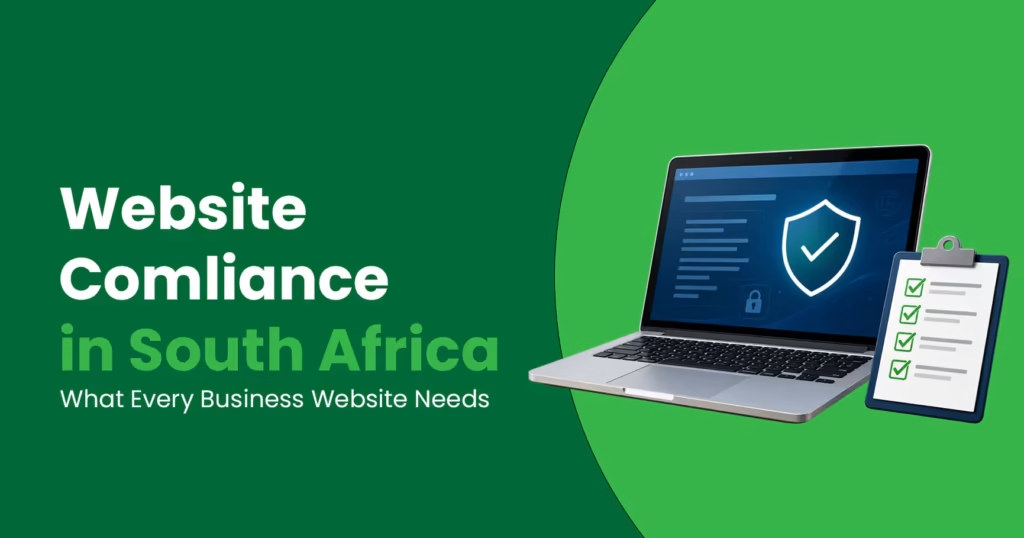
Website Compliance in South Africa guide showing a laptop with a security shield and compliance checklist.
Website Design & Development

Website Compliance in South Africa: What Every Business Website Needs

A business website can look professional, load quickly and generate enquiries but still have compliance gaps. In South Africa, businesses have responsibilities around how their websites collect personal information, display business details and protect consumers online. Even simple features like contact forms, analytics and online payments can introduce compliance requirements. This guide explains the key areas of website compliance South African business owners should know. Important: This article provides general information, not legal advice. Consult a qualified South African legal or compliance professional where necessary. What is website compliance? Website compliance means making sure your website follows the laws and requirements that apply to your business and how the website is used. For South African businesses, some of the main areas include: Not every website has the same requirements. A service-business website with a contact form and an online store processing payments, for example, may have different responsibilities. 1. POPIA and the personal information your website collects The Protection of Personal Information Act (POPIA) regulates how personal information is processed in South Africa. It doesn’t only apply to large companies. Your website may collect personal information when someone: Your business should know what information is collected, why you collect it, how it is used, where it is stored and who has access to it. The Information Regulator South Africa is responsible for monitoring and enforcing compliance with POPIA. Your website should have an appropriate privacy notice A privacy notice explains how your business handles personal information. It should reflect what your website and business actually do. Copying another company’s privacy policy and changing the business name isn’t enough. Your website may use different forms, analytics tools, hosting providers, CRMs and third-party services. Your privacy information should match the way your business actually collects and uses personal information. 2. Cookies and website tracking Many websites use tools that collect information about visitors. These may include: Businesses should know which cookies and tracking tools are running on their website and what information they collect. Your privacy and consent setup should reflect this, rather than simply adding a cookie banner because other websites have one. 3. PAIA and your website PAIA stands for the Promotion of Access to Information Act. It gives people a legal process for requesting access to certain records held by public and private bodies. One important requirement is the PAIA Manual, which the Information Regulator South Africa says organisations must develop and make available through their websites and at their offices. The Information Regulator also provides PAIA Manual templates for public and private bodies. A PAIA Manual explains things such as: If your business has a website, your PAIA Manual should be made available as required and be easy to find. PAIA compliance goes beyond the website Uploading a PAIA Manual doesn’t automatically make the entire business PAIA compliant. Businesses also need to consider wider responsibilities such as Information Officer registration, handling information requests and applicable PAIA reporting requirements. The website is one part of the business’s wider compliance responsibilities. 4. Business information and ECTA Customers should be able to clearly see who they are dealing with. For businesses offering goods or services through electronic transactions, Section 43 of the Electronic Communications and Transactions Act (ECTA) sets out information that suppliers must make available. Depending on the business and transaction, this can include: This information is especially important when customers can transact directly through your website. It also helps build trust, as customers should be able to easily see who owns the business and how to contact you. 5. E-commerce and consumer protection Online stores have additional responsibilities because customers can complete transactions through the website. The Electronic Communications and Transactions Act (ECTA) regulates electronic transactions, while the Consumer Protection Act (CPA) provides broader protection for consumers. Depending on what your business sells, your website may need clear information about: ECTA also provides cooling-off rights for certain electronic transactions, although exceptions apply to some goods and services. Your terms and policies should therefore reflect how your business actually operates rather than being copied from another website. 6. Your website content should be accurate Website compliance isn’t only about legal documents in the footer. What you say on your website matters too. Claims such as: “Guaranteed results.” “South Africa’s #1 provider.” “Clinically proven.” should only be used when your business can support them. This is particularly important when using AI to create website content. AI can produce professional-looking copy quickly, but it can also produce incorrect information. Businesses should review and fact-check AI-generated website content before publishing it. 7. Websites built with AI still need to be compliant AI website builders can now create pages, layouts, images and website copy within minutes. But an AI-built website is not automatically compliant. An AI website builder doesn’t automatically know: AI can help build the website. Your business is still responsible for what the website contains and how it operates. Any AI-built business website should therefore be properly reviewed before it goes live. 8. Website security and protecting customer information If people give your website personal information, you need to take reasonable steps to protect it. Your website should use HTTPS, which encrypts information sent between the visitor’s browser and your website. But security doesn’t stop there. A business website should also be properly maintained through: An outdated website isn’t only a technical problem. It can become a risk when the website collects or stores customer information. This is one reason website maintenance should continue after a website has been launched. 9. Website accessibility Website accessibility means making your website easier to use for people with disabilities and people using assistive technologies. The Government Communication and Information System (GCIS) provides South African website guidance that includes accessibility and refers to Web Content Accessibility Guidelines (WCAG). Basic accessibility includes: The goal is simple: people should be able to find, read and use the information on your website without unnecessary barriers. 10. How website compliance supports SEO and trust Website compliance and SEO are
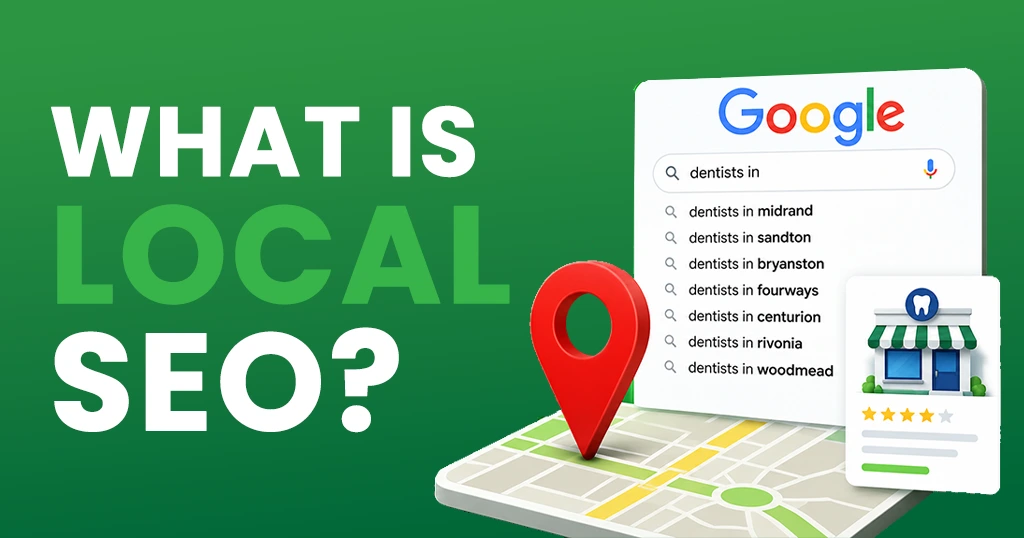
What is Local SEO — example showing a "dentist near me" Google Maps search with storefront and pin, Ranked by Moed
SEO

What Is Local SEO?

Local SEO is the process of helping your business appear when nearby customers search for what you offer — on Google Search, Google Maps, and increasingly, AI-powered search tools like ChatGPT and Gemini. If someone searches “plumber in Midrand,” “dentist near me,” or “solar installer Sandton,” local SEO determines whether your business shows up or your competitor gets the call instead. Unlike traditional SEO, which focuses on ranking nationally or globally, local SEO focuses on winning visibility in the specific cities, suburbs, and communities a business actually serves. For many South African businesses, Local SEO is the digital equivalent of having the best location on the busiest street in town. Why Local SEO Matters The way people discover local businesses has changed completely. Nobody drives around looking for signboards anymore — they pull out their phones. These are not casual searches. According to Google, 46% of all search queries have local intent, and 78% of people who search for something nearby on their phone visit that business within a day. When somebody in Sandton needs an electrician, or somebody in Durban wants dinner nearby, they search — and they usually act on what they find quickly. That makes local SEO one of the highest-intent marketing channels available. Unlike social media, where a business interrupts someone’s attention, local SEO places a business in front of people who are already looking for exactly what it offers. How Local SEO Works Google’s goal is simple: show the most useful nearby business. To do that, Google evaluates three primary factors. 01 Relevance Google wants to understand how closely your business matches what somebody is searching for. A plumbing company should appear for plumbing searches, not electrical searches. 02 Distance Google looks at where the searcher is located and how close your business is to that location. 03 Prominence This is Google’s measure of trust. Reviews, website authority, local mentions, business information, and online reputation all help Google determine whether your business deserves visibility. When these signals are strong, your chances of appearing in Google Maps, local search results, and location-based searches improve significantly. Want your business to show up first in your area? See our Local SEO services, with packages from R3,500 per month. Who Needs Local SEO? Not every business depends on Local SEO equally. A software company selling internationally has very different needs from a plumber servicing Midrand. Businesses that rely on local customers benefit the most. This includes restaurants, coffee shops, dentists, doctors, mechanics, electricians, plumbers, locksmiths, solar installers, estate agencies, gyms, salons, retailers, attorneys, accountants, and many professional service providers. The common factor is simple: customers need to find them within a specific geographic area. A plumber does not need website visitors from London. A dentist in Pretoria does not need traffic from Durban. They need visibility where their customers actually are. Why These Businesses Need Local SEO Local businesses compete for attention at the exact moment somebody is ready to spend money. When a geyser bursts, nobody scrolls Instagram looking for a plumber. When somebody needs a family doctor, they rarely start on TikTok. When a visitor wants a restaurant nearby, they usually search Google Maps. These moments represent demand that already exists. Local SEO helps businesses capture that demand. Without it, competitors become visible while your business remains hidden. The Biggest Marketing Mistake Local Businesses Make Many South African businesses rely entirely on social media, word of mouth, or occasional advertising. The problem is that these channels create awareness but do not always capture existing demand. A Facebook page does not automatically help somebody find you when they search “electrician near me.” A beautiful website does not help if nobody discovers it. Paid advertising generates visibility, but the visibility disappears when the budget stops. The most successful local businesses build a balanced marketing strategy. Their website converts visitors. Social media builds awareness. Advertising generates immediate leads. Local SEO captures people already searching for solutions. What It Takes To Succeed With Local SEO Many business owners understand the value of Local SEO but want to know whether it is worth the investment. The answer depends on the industry, competition, and market opportunity. The Benefits Of Local SEO Strong Local SEO can generate: Unlike many marketing channels, Local SEO targets people with existing buying intent. These are not passive viewers. These are people actively searching for a solution. That is why Local SEO often produces higher-quality leads than many other forms of digital marketing. How Much Does Local SEO Cost In South Africa? Local SEO costs vary depending on the industry and competition. A small business in a less competitive area may spend between R2,000 and R5,000 per month. Businesses operating in highly competitive sectors such as legal services, medical practices, security, plumbing, or solar installation often invest between R5,000 and R15,000+ per month. Several factors influence pricing: A locksmith competing in Sandton faces a different challenge from a bakery serving a small town. The investment required reflects that reality. How Long Does Local SEO Take? Local SEO is not instant. Most businesses begin seeing meaningful progress within three to six months. Businesses with an established website and existing reputation may see improvements sooner. New businesses typically take longer because Google has less historical trust and data to work with. The important thing to understand is that Local SEO compounds. The work done today continues creating value long after it is completed. The Real ROI Of Local SEO The real return is not rankings. The real return is business growth. Better visibility leads to more enquiries. More enquiries create more opportunities. More opportunities generate more revenue. Unlike paid advertising, where every lead has a direct cost attached to it, Local SEO can continue generating enquiries long after the initial work has been completed. That makes it one of the few digital marketing investments that becomes more valuable over time. Local SEO In The AI Era Local search is changing faster than it has in years. Google AI Overviews, Google

Two business professionals reviewing SEO strategy on a laptop — Ranked by Moed, Johannesburg
SEO

What Is SEO: Why does your business need it in 2026

SEO, or search engine optimisation, is the process of improving your online visibility so your business appears when potential customers search for products, services, or information related to what you offer. In 2026, SEO is no longer just about Google rankings. It determines whether buyers find your business, your competitor, or an AI-generated answer that never mentions you. Why This Matters for Your Business Every day, potential customers search for solutions online. If your business is not visible when those searches happen, you are not part of the buying conversation. Many South African businesses lose opportunities not because their products or services are inferior, but because they are difficult to find. Buyers cannot choose a business they never discover. Visibility influences consideration. Research habits have changed dramatically. Before contacting a supplier, buyers compare websites, read reviews, search for answers, and evaluate credibility. By the time they submit an enquiry, they often have a shortlist in mind. What Is SEO? SEO is the process of making your business easier to find, understand, and trust online. A simple way to think about SEO is to imagine Google as a concierge at a five-star hotel. Every day, people ask that concierge for recommendations. The concierge’s reputation depends on recommending the best option available. Your website is one of those options. SEO is the work you do to convince the concierge that your business deserves to be recommended. That means: SEO is not about tricking search engines. It is about making your business so relevant, useful, and trustworthy that search engines would struggle to justify recommending anyone else. How Search Engines Decide What to Show Search engines evaluate billions of web pages in seconds. Their goal is simple: provide the best possible answer to a user’s question. Relevance Search engines determine whether your content matches what someone is searching for. If a user searches for a specific service, they want the most relevant answer available. Your content must clearly address the problem being searched. Authority Search engines assess whether your business can be trusted. They look at factors such as expertise, reputation, backlinks, and brand credibility. Google increasingly evaluates content through the lens of Experience, Expertise, Authoritativeness, and Trustworthiness (E-E-A-T). User Experience A slow or frustrating website creates a poor experience. Search engines favour websites that are fast, mobile friendly, secure, and easy to navigate. Even great content can struggle if the website experience is poor. This is where keyword research and technical website optimisation become important. Internal link placeholder: “keyword research” → What Is a Keyword — And How Do Businesses Use Them to Get Found Internal link placeholder: “technical SEO” → What Is Technical SEO — And Does Your Website Need It A useful analogy comes from the builders of medieval cathedrals. They understood that the strength of the entire structure depended on the foundation beneath it. SEO works the same way. Without a strong technical foundation, even excellent content struggles to perform. Why South African B2B Businesses Need SEO South African B2B buying behaviour has changed significantly. Procurement teams, executives, and business owners now conduct extensive online research before engaging a supplier. Many decisions are influenced long before a discovery call or proposal request takes place. Buyers research before they enquire. Generate Higher-Quality Enquiries People using search engines are often looking for answers, suppliers, or solutions right now. This creates stronger commercial intent than many outbound marketing methods. When your business appears at the moment a buyer is searching, you are entering the conversation at the point of need. Capture Regional Search Demand South Africa is highly regionalised. A company serving Gauteng, Durban, Cape Town, or Rustenburg may benefit more from targeted local visibility than broad national awareness. Searches such as: often indicate strong buying intent. Establish Trust Required for Large Contracts B2B purchases often involve multiple stakeholders, lengthy evaluation processes, and significant budgets. Ranking prominently in search results helps signal credibility and stability. Supporting that visibility with useful content, case studies, and proof of expertise helps buyers feel confident moving forward. What an SEO Company in Johannesburg Actually Does Ranking Versus Generating Enquiries Ranking and generating enquiries are not the same thing. A ranking places your website in front of a potential customer. An enquiry turns that attention into a business opportunity. Visibility alone does not generate revenue. Many businesses rank well but struggle to generate leads because: The real goal of SEO is not rankings. The real goal is moving a buyer through four stages: At Ranked by Moed, this distinction matters. Businesses do not invest in SEO because they want first-page rankings. They invest because they want qualified enquiries, stronger market presence, and sustainable growth. What SEO Looks Like in 2026 SEO in 2026 extends far beyond traditional search results. Search visibility now exists across multiple environments. Traditional Search Google and Bing remain important sources of discovery. Businesses still need strong organic visibility for commercial and informational searches. Local Search Google Maps and Google Business Profiles influence purchasing decisions daily. For many service businesses, local visibility is just as important as website rankings. AI Search AI-powered search experiences are changing how information is consumed. Platforms such as ChatGPT, Gemini, Copilot, and Perplexity increasingly provide direct answers instead of simply presenting links. This has created a growing focus on AI search and Generative Engine Optimisation (GEO). Internal link placeholder: “AI search” → What Is GEO — Generative Engine Optimisation and Why B2B Businesses Need It Success increasingly depends on whether AI systems view your business as a credible source worth referencing. Businesses that publish original expertise, genuine experience, and useful insights are more likely to be cited and discovered across AI-powered platforms. People Also Ask How long does SEO take to work? SEO generally takes between four and six months to show measurable results, with stronger returns often appearing after twelve months. The timeline depends on competition, website quality, industry demand, and the authority of your domain. Is SEO worth it for small businesses? Yes. SEO allows small

Scroll to Top
Request Website Support